Svalbard or Antarctica?

Is Svalbard the “budget” polar alternative to Antarctica? You wouldn't expect to see Svalbard (or anything related to Norway) in the same sentence, but compared to Antarctica, it definitely is the more budget friendly of the two!

Disclaimer - this article contains affiliate links, which means we receive a commission if you decide to book/purchase via the link, at no extra cost to you. We will only ever recommend services, tours and operators that we have personally used and consider good value.
As a vet and a biologist as well as avid travellers, we would love to visit Antarctica - it’s said to be other-worldly and home to insane wildlife in it's pristine, protected land. However, there's a limiting factor - cost. We seriously considered Antarctica for our honeymoon, but had to put our dream aside because we simply could not afford it. The harsh truth is that it is VERY expensive - we couldn’t find anything less than £7k for a very basic cabin on the shortest expedition cruise from Ushuaia, and that’s not including flights to Argentina and other costs. Factoring these in, you’re realistically looking at around £10k per person from the UK. So we abandoned our (very early stage) plans and went to Kyrgyzstan instead!
After returning from Kyrgyzstan, we still had the bug for a polar adventure and started looking into Svalbard instead - another bucket list destination for me, since I had read His Dark Materials long ago.
Despite Norway’s reputation for being eye-wateringly expensive, I soon found that visiting Svalbard is actually achievable on a “budget”. It might be the opposite pole, but it may well just scratch the itch for Antarctica for a while.
Now, I can’t actually speak from experience when it comes to Antarctica (obviously), but I can compare what a trip might entail in the Arctic versus Antarctic.
Travel Time
First things first - how to get there. From the UK (as we are) there is a HUGE difference. The arctic is not actually as far as you might think. Whereas the closest (believe it or not) point to get to Antarctica is the very tip of Argentina. You can also get there from New Zealand (even further away) via cruise. You can only fly to Antarctica if you are working there eg, for research purposes.
Arctic (Svalbard) - around 7 hours including layover time: 2hr flight London -> Oslo, then 3hr flight Oslo -> Longyearbyen (Svalbard)
Antarctic - 3 days: 24 hr travel time London -> Ushuaia (via Buenos Aires), then 2 days by boat across the Drake Passage.

Accommodation
There are no permanent settlements on Antarctica other than research bases. You therefore have to sleep on your cruise ship. So cruises do offer camping for one night as part of the experience, but this is strictly regulated (you can’t just rock up with your own tent). Longyearbyen is the largest settlement on Svalbard and offers a range of sleeping options within the town.
Arctic - a variety of options in Longyearbyen from budget (£95/night for twin/double room) to luxury.
Antarctic - you must sleep on the ship, sometimes with an option to camp for 1 night.
Wildlife
The wildlife varies between these regions (after all, they are literal polar opposite geographically).
Antarctic - various whale species, penguins, sea birds, seals
Arctic - Reindeer, arctic fox, walruses, whales, seals, birds, narwhals, polar bears (if you’re very lucky/unlucky!)
Activities
Daily activities in Antarctica will depend on what your cruise offers and can include zodiac boat trips, paddle boarding, kayaking and a polar plunge.
On Svalbard, you can do all of the above, with the added bonus of a sauna after your arctic plunge. You can also take a dogsledding trip, snowmobile, hike, ski and more.
Longer expeditions in Antarctica are limited to researchers or explorers with specific permits. Whereas multi-day arctic expeditions - be that dog sledding, snowmobiling or hiking are quite freely available to the public if booked through a tour operator.

Temperature
You might be surprised to find that you’re more likely to experience colder temperatures in the Arctic than on Antarctica. This is because of the location and time of year that the general public can visit is restricted. While temperatures do get as cold as -60’C inland in Antarctica, you’re not likely to experience this unless you’re stationed at a very remote research centre.
Arctic (Svalbard) - varies from 10℃ to -30℃
Antarctic Peninsula - varies from 10℃ to -15℃
When to Visit
Arctic (Svalbard) - year round with different seasons offering different experiences - read here for more on when to visit Svalbard.
Antarctica - you can only Visit between November and March due to the safety of crossing the drake passage (it’s much rougher outside these months).

Cost
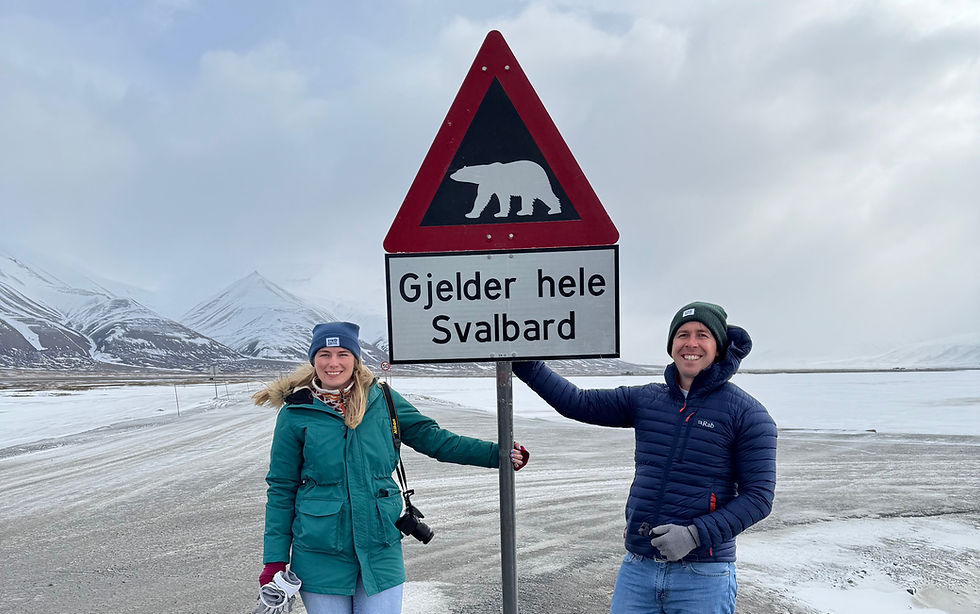
The big difference is cost - we visited Svalbard for £1300 per person for a 6 day trip. (You could definitely get this down to £1000 - check out our Svalbard guide to find out how).
Arctic - doable for £1k per person
Antarctic - around £10k per person
You can literally visit the Arctic for a tenth of the cost of Antarctica.
The verdict
While Antarctica is the ultimate once in a lifetime experience, unfortunately, it’s just out of reach financially for the vast majority of us. Svalbard might be the opposite pole, but it certainly does feel other-worldly, or at least like you’re on the edge of the earth and the edge of civilisation. With a similar climate, a daylight schedule like no other, and incredible wildlife in it’s own right we feel that Svalbard could be the budget polar adventure you’re looking for if Antarctica is out of reach.
All of our resources are FREE, but if you found them helpful, you can buy us a coffee here, so we can get a much-appreciated caffeine hit and keep providing you with travel hacks and budgeting tips.
Enjoyed this post? Subscribe below to be the first to receive updates on blogs, travel guide releases and more!
Comments